TIME TO GET REAL
The future of air supremacy is here
GA-ASI President on Uncrewed Fighters: "If you wait 5-8 years … they're too late"
The clock has run out.
The time to begin building uncrewed fighters in large numbers is now, says General Atomics Aeronautical Systems President David Alexander.
"If you wait 5, 8 years to bring these aircraft to combat, they'll be too late," Alexander said. "They need to come out now and they need to come out in large numbers. That's really where we are now. The time for talk is done."

Fortunately, GA-ASI already has begun, he said.
Citing recent conflicts, Alexander said the changes in warfare over the past five-plus years have made clear that continuing to treat uncrewed combat air vehicles (UCAV) like experiments will spell disaster on the battlefield.
The change has happened. This is no longer a challenge of evaluation – but one of execution.
"Our company has had a front-row seat to witness the almost unbelievable pace of change on today's battlefield," Alexander said. "Over the past 30 years, our uncrewed aircraft have flown more than 9 million flight hours, most of them in combat, and we've seen the challenges that advanced munitions, drone swarms, and sophisticated integrated air defense present to even the best-equipped forces.
"So, the message is simple: No more science experiments. Let's get real about building this capability at scale."
Build, Operate, Adapt
The right approach now, Alexander said, is to start fielding systems in numbers, deploy them forward, and upgrade the capability based on real operational data.
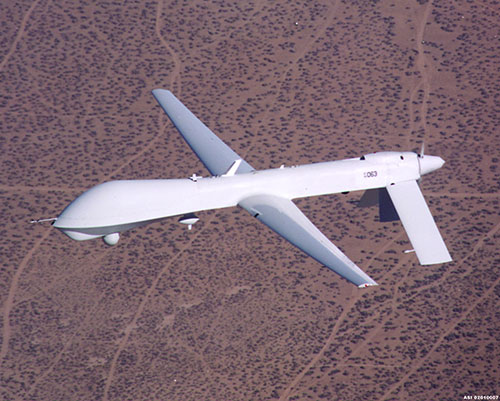
"We've not forgotten our history as a company," Alexander said. "The Predator changed aviation history with rudimentary remote piloting systems flying an aircraft that used an engine no more powerful than you'd find on a snowmobile.
"As we racked up 10's of thousands of operational hours, we poured those lessons learned into the aircraft and those, in turn, informed the aircraft we had in development. That's the model for fielding a revolutionary new capability quickly: Build it fast, fly it in real-world operations, and improve as you go forward. And because we have taken the pilot out of the cockpit, we can be aggressive with leaning forward. We're not putting any crews' lives at risk."
GA-ASI's Gambit
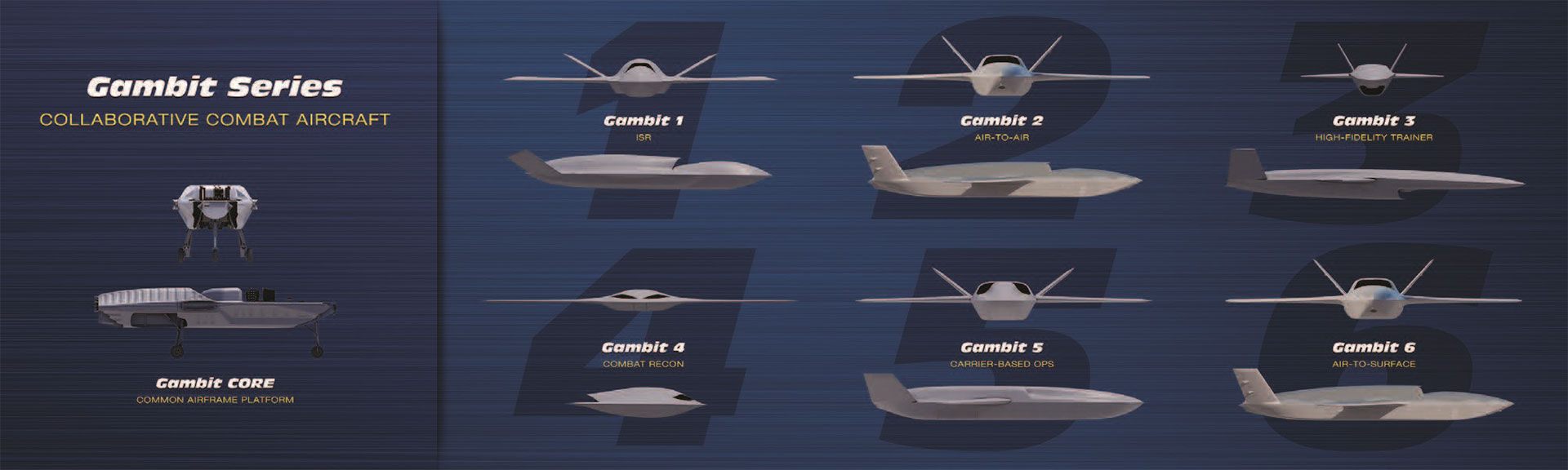
To be able to produce UCAVs at the pace of the threat, GA-ASI began with a simple design concept the company knew it could execute quickly. The company calls it "Gambit Series."
Based on insights gleaned through close collaboration with the U.S. Air Force Research Lab and other partners, the Gambit concept encompasses six variants with different dedicated capabilities all based around a common core. This makes the aircraft much simpler and less expensive to produce than independent different airframes.
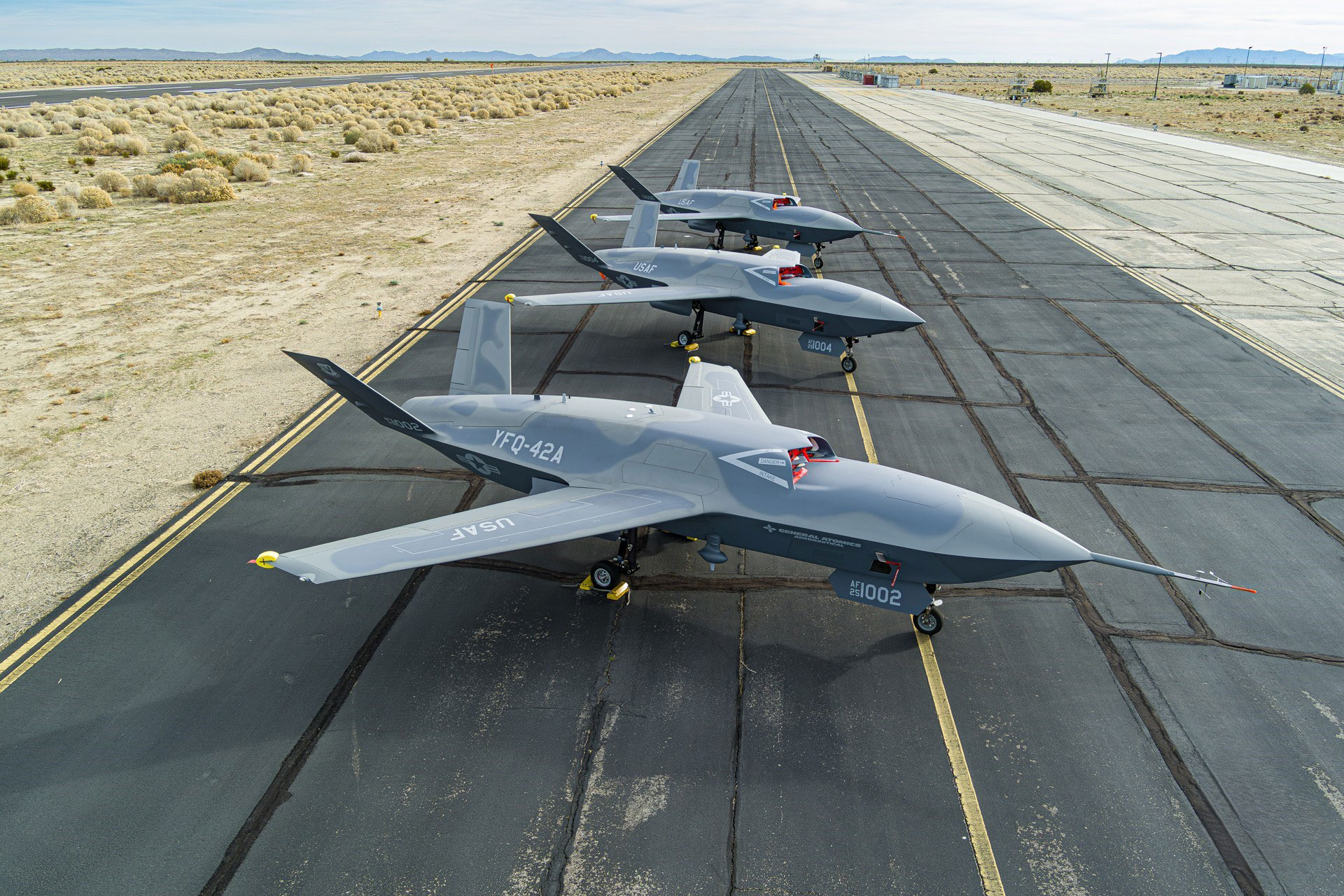
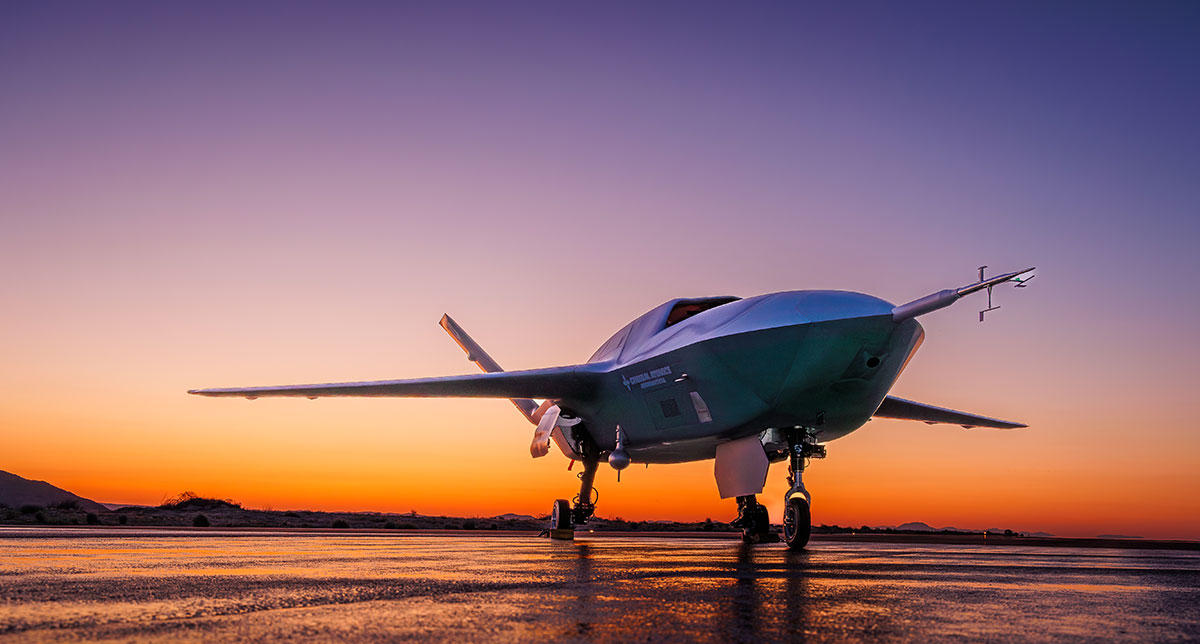
The Air Force endorsed this vision and commissioned the aircraft that has become the YFQ-42A as part of its Collaborative Combat Aircraft program, or CCA. In the summer of 2025, the first of these jets made its maiden flight. Since then, several others have followed in low-rate production.
The Gambit Series represents GA-ASI's vision for the future of tactical air power, pairing semi-autonomous uncrewed aircraft with piloted fighters like the advanced fourth-generation F-35 and fifth-generation Next-Generation Air Dominance (NGAD) systems.
This modular approach allows GA-ASI to both control costs and complexity inherent in multi-mission aircraft and produce mission-dedicated aircraft in large numbers with its existing manufacturing infrastructure.
"Our company has the production capacity, the know-how, the track record and most importantly – actual aircraft flying – that we're ready to produce at scale today," Alexander said. "Not in five years. Not in 10 years. Today. We've got 5 million square feet, ready to go as we speak."
The Vertical Advantage
GA-ASI's ability to deliver at scale is underwritten by its vertically integrated business model.
The company's structure allows it to maintain control over every element of production, Alexander said.
"We're roughly six companies in one, and that allows us to have control over every element of what we do," he said. "We design and build our own airframes. We design and build our own avionics, our own landing systems, cables and harnesses. We own three airports: at will, we can go whenever we want and do engineering testing and move the ball forward. We have what it takes, vertically, to control our destiny."
A 'National Asset'
When it comes to fielding UCAVs quickly, Alexander made the argument that as a privately held company, GA-ASI is the right partner to deliver with both speed and agility.
"What differentiates General Atomics from the rest of the pack is that we're really the perfect sized company, and the key part is that we're a private company owned by real aviation visionaries," Alexander said.
"So, we're big enough to take on, and do, and accomplish what we say we're going to do," he said. "But we're still small enough to lean forward, to forecast at our own risk, operate the company more like a commercial company because we're privately held.
That combination is what makes us a disrupter: It's what makes us different."
As nations seek partners to produce critical uncrewed fighter jet capability at the scale and with the speed dictated by the threats of the modern battlefield, GA-ASI's results speak for themselves, Alexander said.
"We have been around long enough that we know how to do this," he said. "We've delivered 1,600 aircraft; we've done 9 million flight hours; we have a thousand people downrange operating in 80 locations around the world. Nobody else is doing that.
"Yet we're still small and nimble enough to do the right thing and bring product quickly to the warfighter. So, when we say we're going to do something we do it. And we do it on time and on budget.
"General Atomics Aeronautical Systems is a national asset. It didn't happen overnight. It has taken more than 30 years to get where we're at. But it's here, it's ready to go, and it's wholly dedicated to unmanned aircraft."